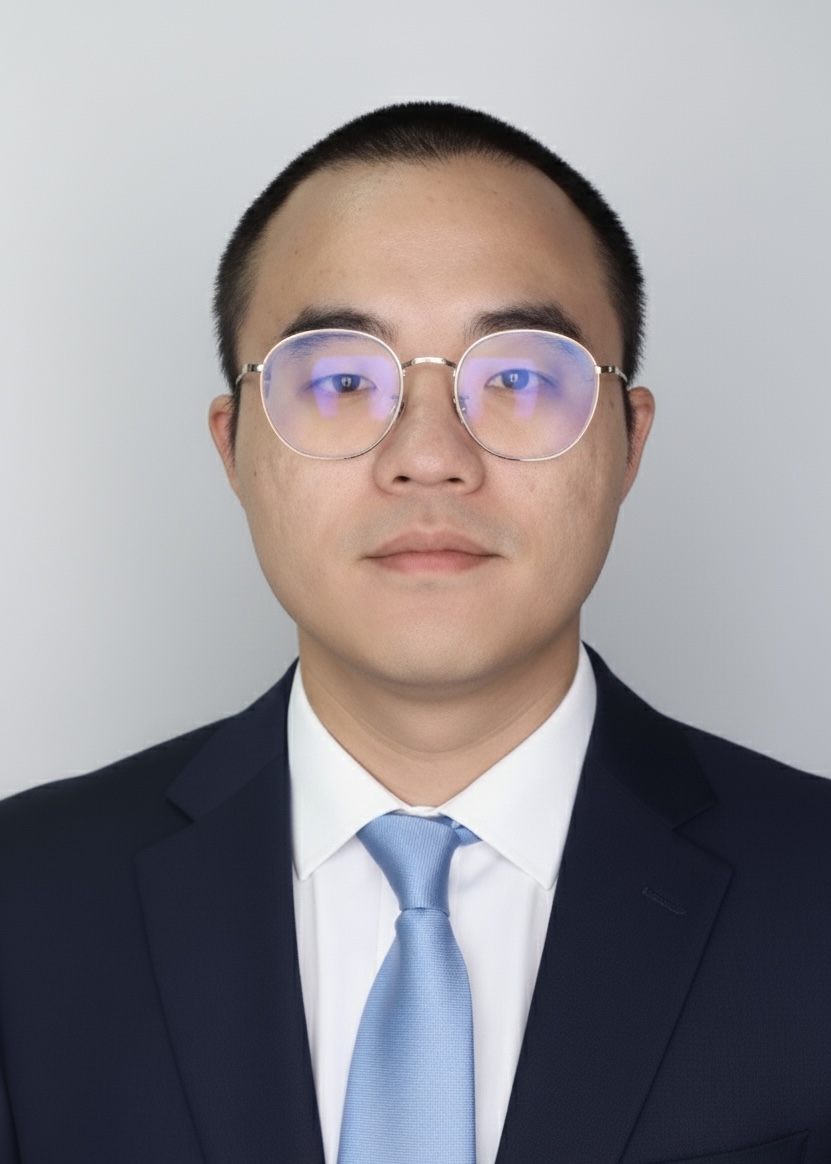
Welcome to my website! I am a Ph.D. candidate at the University of Western Ontario, Department of Economics.
I am on the job market in the 2025–2026 academic year.
My primary research interests are macroeconomics, monetary economics, and financial economics.
Email: fxiang8@uwo.ca
CV
Working Papers
Job Market Paper
Abstract (click to expand): Repurchase agreements (repos) with the same collateral and maturity exhibit substantial price dispersion, indicating limits to financial arbitrage. Moreover, central bank policy rates only partially pass through to repo rates, despite determining the funding costs for repo dealers. I show that search frictions in over-the-counter repo markets generate endogenous repo price dispersion and imperfect monetary policy pass-through. I embed these frictions in a general equilibrium framework to evaluate monetary policy. The key insight is that policy transmission depends less on the overall distribution of repo prices, but more on the concentration in the tails. Standard monetary policy, which relies on the central bank's deposit facility, affects only one tail through dealers' funding costs, while the other is determined by repo customers' liquidity demand. This leads to imperfect pass-through from policy rates to repo prices, with pass-through weakening as repo prices concentrate in the insensitive tail. The central bank's lending and borrowing facilities cannot improve pass-through, despite affecting repo customers' liquidity demand. Moreover, introducing the borrowing facility raises inflation. Consistent with the Friedman rule, pegging deposit and lending facility rates to the zero lower bound achieves efficiency.
Revision Requested by International Economic Review
Abstract (click to expand): I study how central banks should use their balance sheets to control flight-to-safety in a model with retail and wholesale banks, where the magnitude of flight-to-safety is endogenously determined by the severity of wholesale banking panics. Expanding the central bank's balance sheet, through swaps of reserves for government bonds, mitigates wholesale banking panics. However, this policy lowers asset returns, limiting the usefulness of assets in transactions, which harms depositors. Instead, swapping reserves for other central bank liabilities accessible to wholesale banks mitigates panics without reducing asset returns or transactions. For example, the U.S. Federal Reserve's overnight reverse repurchase agreements serve this purpose. Critical for these results are endogenous shifts in asset demand. When central banks reduce the supply of safe government bonds to private markets, as in balance sheet expansions, there are large increases in the demand for private banks' liabilities which bid down their returns. Adjusting the composition of central bank liabilities avoids such large demand shifts.
[Slides]
Abstract (click to expand): I study asymmetric information in bank lending and its implications for monetary policy. Banks lend against collateral but incur screening costs because households possess private information about collateral values. While loans entail screening costs, they are useful assets to back banks' liquidity insurance services, especially when safe assets, such as government bonds, are scarce. Raising the nominal interest rate on bonds discourages lending and increases banks' opportunity cost of holding currency, thereby reducing banking services. Nevertheless, reduced lending saves on banks' screening costs. I show how these savings can outweigh the losses from reduced banking services, at least locally, when the nominal interest rate rises to the point that shuts down the loan market and eliminates the need for screening. Moreover, such a high nominal interest rate can be globally optimal in situations where screening is particularly costly. In other words, the Friedman rule, which suggests a zero nominal interest rate, is not necessarily optimal. Finally, I propose a loan subsidy program that eliminates screening costs, under which the Friedman rule is optimal.
Work in Progress
Wealth and Capital Taxation with Risky Returns
(with Sergio Ocampo)
Academic Presentations
How Central Banks Should Use Their Balance Sheets to Control Flight-to-Safety
- Rice-LEMMA Monetary Conference · Paris, France · May 2024
- Canadian Economic Association Annual Conference · Montreal, Canada · May 2025
- Summer Workshop on Money, Banking, Payments, and Finance · Ottawa, Canada · August 2025
Discussant for Payment Data, Information Disclosure, and Privacy by Kee-Youn Kang and Zijian Wang
- Annual Workshop of Southern Ontario Macro Economists · London, Canada · May 2025
Teaching
Instructor at the University of Western Ontario
- Intermediate Macroeconomic Theory and Policy I, Fall 2024
Teaching Assistant at the University of Western Ontario
PhD Level
- Review Course for incoming first-year PhD students, 2021, 2022, 2023, 2024
- Microeconomics I & Microeconomics II, 2021-2022
- Awarded the Graduate Teaching Assistant of the Year
- Macroeconomics I & Macroeconomics II, 2022-2023
- Awarded the Graduate Teaching Assistant of the Year
- Economic Mathematics, 2023
- Awarded the Graduate Teaching Assistant of the Year
Masters Level
- Macroeconomic Theory for Finance, Winter 2024
Undergraduate Level
- Advanced Macroeconomics I, Fall 2024
- Principles of Macroeconomics, Winter 2025
- Principles of Microeconomics, Fall 2025